MT2030
Solutions Framework
A practical set of systemic, achievable solutions focused on what matters most.
This first-of-its-kind tool connects communities that need help with those that have successfully deployed solutions, streamlining project planning and deployment and accelerating our collective progress toward zero emissions. It also provides access to a network of peers and valuable resources, helping communities move from ideas to action faster.
Focus Solution
Fix Transportation
Reduce your community’s transportation emissions.
Transportation accounts for approximately 60% of mountain towns’ energy needs, including airline travel. With a focus on public transportation, biking, and walkability in urban planning, accelerating the adoption of electric vehicles and infrastructure, and investing in clean-fuel technologies and sustainable aviation, mountain towns can lower their transportation emissions.
Focus Solution
Optimize & Electrify Buildings
Buildings are responsible for approximately 42% of global carbon emissions. Substantially decarbonizing buildings includes increased electrification and greater energy efficiency of both existing buildings and new construction.
Focus Solution
Deploy Clean Energy
Clean up the grid.
By deploying local wind, solar, geothermal, and hydropower, and working with local utilities to change the grid upstream, we can decrease more than 30% of our carbon emissions.
Focus Solution
Green Your Finances
Financial management is a force for good.
The financial system can be our most powerful lever to tackle the climate crisis, shifting trillions of dollars from financing projects that accelerate the climate crisis toward ones that solve it.
Focus Solution
Reduce Waste to Zero
Methane accounts for roughly 10% of total greenhouse gas emissions in the United States. Zero waste practices such as circularity, recycling, and composting reduce emissions, save energy, and create healthy soils.
Focus Solution
Engage & Advocate
Use your voice.
Mountain communities are globally recognized brands, creating jobs and driving robust year-round tourism economies. With our economic influence and so much at stake, we have a substantial role in advocating for new climate policies at the state and local levels.
Focus Solution
Protect the Natural Environment
Nature-based solutions could contribute about 20% of the mitigation needed to keep global warming below 2°C. Alongside economy-wide decarbonization efforts, reforestation, climate-smart agriculture, and wetland restoration harness natural processes to reduce greenhouse gas concentrations.
Focus Solution
Mobilize Citizens & Visitors
Mobilize millions of citizens and visitors to protect the places we love.
We must leverage the passionate voices of our citizens to advocate locally and demonstrate the kind of climate leadership and innovative solutions our guests can implement back home.
 Engage & Advocate
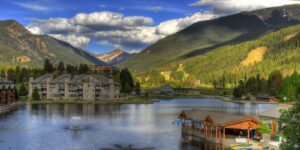
Keystone Trail Signage and Wayfinding Plan
Project Overview The Town of Keystone is at a unique point in its history, having been formally incorporated as a town in February 2024, only two years ago as of this writing. Many aspects of the town’s governance, structure, and character are just beginning to develop. This means that climate mitigation and sustainability efforts made […]
 Fix Transportation
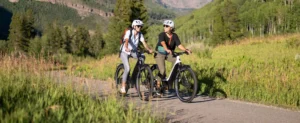
Discover Vail: Walk, Bike or Ride
The Town of Vail embraces green transportation with all its challenges, knowing it is cultivating and sharing a path toward a better future for its citizens, visitors, and the world. Project Overview The Town of Vail is proving that navigating a mountain town doesn’t have to mean getting behind the wheel or breathing polluted air. […]
 Deploy Clean Energy
SustainableBreck Plan
Project Overview In 2011, the Town of Breckenridge implemented its inaugural SustainableBreck Plan. The plan primarily focused on broad sustainability goals paired with solutions for community and residential issues. The 2022 iteration of the plan was built through large-scale community engagement. Gathering feedback from residents and visitors over a six-month period helped determine which goals […]
 Mobilize Citizens
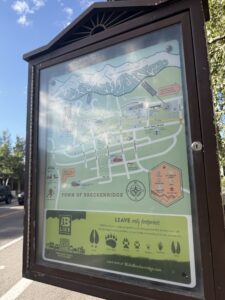
B Like Breckenridge
Project Overview The Town of Breckenridge has released a communications and guidance program, and now a mobile app, called B Like Breckenridge. B Like Breckenridge provides sustainability-related information and education for visitors and residents. The program is managed by the Breckenridge Tourism Office, which created the platform to answer visitors’ frequently asked questions and to […]
 Reduce Waste to Zero
Dish: Reusable Foodware in Deschutes County, Oregon
Project Overview The Dish program (previously Reuse Deschutes) aims to transition Central Oregon’s food service industry from single-use foodware to washable, reusable plates, bowls, boats, trays, cups, and silverware. The program was initiated by Kavi Chokshi, the Rethink Waste Innovation Manager at The Environmental Center, through which Dish will be launched. The Environmental Center is […]
 Protect the Natural Environment
The Rights of Nature: Jackson is Giving Nature a Seat at the Table
Project Overview The Town of Jackson, Wyoming, adopted Resolution 24-15, A Resolution to Recognize and Uphold the Rights of Nature, as part of its Sustainability Plan in 2024. The resolution recognizes that natural ecosystems have intrinsic value and the right to be “healthy, resilient, and respected,” and to exist and flourish. These principles align with […]
 Green Your Finances
Taos Ski Valley Green Banking Initiatives
Project Overview Taos Ski Valley has incorporated green banking initiatives into its overall sustainability strategy, based on the resort’s core mission and values — environmental stewardship, social responsibility, and community wellbeing — encapsulated in its purpose statement: enjoy, protect, give. These commitments naturally led to other actions, including obtaining B Corp Certification and moving beyond […]
 Deploy Clean Energy
Vail’s Thermal Energy Network
Project Overview The Town of Vail is in phase 1 of building a Thermal Energy Network (TEN) that distributes heat between buildings, facilities, and geothermal sources to improve heating and cooling efficiency, reduce energy consumption and greenhouse gas emissions, and benefit the local economy. Vail’s 2023 Stewardship Roadmap aims to reduce greenhouse gas emissions 25% […]
 Reduce Waste to Zero
Aspen’s Organic Waste Diversion Initiative
Project Overview Aspen, Colorado has deployed a robust Organic Waste Diversion program by passing an ordinance that will ban all organic waste from the town’s trash and recycling by 2028. The policy addresses a critical issue a waste study identified: 42.6% of the trash entering the Pitkin County Solid Waste Center was compostable, organic matter. […]
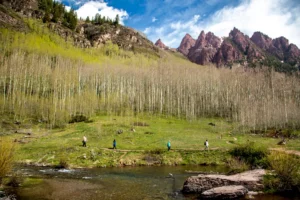 Protect the Natural Environment
Eldora-Nederland Wetland Mitigation Initiative
Project Overview The Fisherman’s Lot Wetlands Creation Project transformed an ecologically degraded municipal dirt parking lot in Nederland, Colorado, back into a functional, native wetland ecosystem. The project was made possible by a public-private partnership between the Town of Nederland and Eldora Mountain Resort, and shows the power of the private sector to leverage mandatory […]
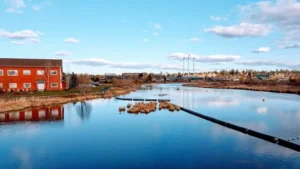 Optimize & Electrify Buildings
Bend, Oregon Climate Pollution Fee
Project Overview The City of Bend, Oregon enacted a Climate Pollution Fee in June 2026 to advance community decarbonization goals by disincentivizing new natural gas infrastructure and household appliances, like stoves, water heaters, and furnaces, in new residential construction. The city worked with local citizen committees, including the Environment and Climate Committee, to build public […]
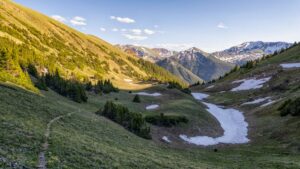 Engage & Advocate
Colorado Communities for Climate Action
Project Overview Colorado Communities for Climate Action, also known as CC4CA, is a coalition of Colorado communities advocating for stronger climate policy at the state level. CC4CA is active at the Colorado state legislature, as well as in regulatory proceedings such as those at the Public Utilities Commission (PUC), the entity that regulates electricity rates. […]
 Reduce Waste to Zero
Avon’s Commercial Composting Pilot
Project Overview Avon’s Universal Recycling Ordinance, released in 2022, requires all businesses and homes to have their own recycling containers in addition to their landfill trash baskets. As a follow-up effort to include composting, the 12-month Commercial Composting Pilot was developed by Avon’s sustainability team, led by Charlotte Lin, and approved by the town council […]
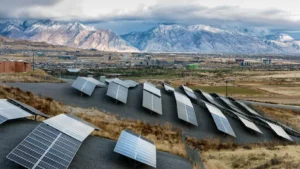 Deploy Clean Energy
Utah Renewable Communities
Project Overview Utah Renewable Communities (URC) is a first-of-its-kind-in-the-nation partnership between 16 Utah communities and Rocky Mountain Power (RMP), their utility. The project’s goal is to provide an annualized net 100% clean power option to participating communities by 2030 — meaning that over the course of a year, for every kilowatt-hour of power used, the […]
 Optimize & Electrify Buildings
Eagle County’s Building Decarbonization Master Plan
Project Overview Eagle County, Colorado, a county of about 55,000 people that stretches from resort communities like Vail and Beaver Creek to working ranch land, is building a decarbonization master plan for every building and vehicle it operates. The county’s goal is to eliminate fossil fuel use in its operations by 2050, with a 50% […]
 Protect the Natural Environment
Paying Ranchers and Farmers for Soil Health: San Miguel County’s Payment for Ecosystem Services Program
Project Overview San Miguel County in southwest Colorado covers 1,289 square miles and has about 8,000 residents. Roughly 60% of the county is public land, and 29.5% of county land is classified as agricultural, ranging from irrigated ranches and farms in the central county to dry grazing land in the west end. Many of those […]
 Green Your Finances
Climate-Aligned Treasury Management: Decarbonizing a Town’s Banking and Cash
Project Overview When a town, company, or household deposits money in a bank, that money does not sit still. Moinester noted that about 90% of deposits are lent back out into the economy, and at large Wall Street banks roughly 20 to 30% of lending goes to the most carbon-intensive sectors such as energy production, […]
 Engage & Advocate
Ski Areas as Climate Advocates: Using Business Influence to Advance Climate Policy
Project Overview Ski areas sit in an unusual position: they are often among the largest employers and tax generators in their mountain communities, they depend directly on a stable climate, and they have strong brands that people love. The panel argued that this combination gives resorts real power to shape climate policy, and that advocacy […]
 Reduce Waste to Zero
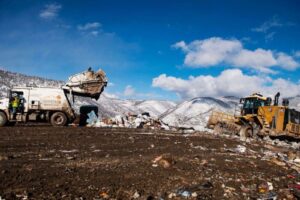
Waste Diversion in Mountain Towns: Recycling Ordinances, Zero Waste Events, Community Education, and Packaging EPR
Project Overview Mountain towns face a particular set of waste challenges: heavy visitor traffic, large special events, seasonal and short-term rental turnover, multifamily housing with little storage space, bear-country trash rules, and long distances to recycling markets. The panel shows how a combination of local policy, partnerships, education, and state policy can move diversion rates […]
 Fix Transportation
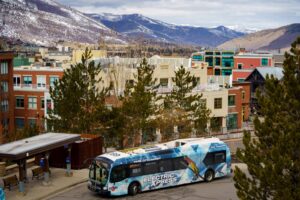
Data-Driven Fleet Electrification Planning with Your Utility
Project Overview Mountain fleets face extra hurdles when electrifying: cold temperatures cut battery range, few electric models offer all-wheel drive or high clearance, and operators like Vail Resorts run vehicles across more than one utility service territory. Vail Resorts’ Epic Mountain Express shuttle service, which runs mostly 15-passenger vans between Denver International Airport, Eagle County […]
 Deploy Clean Energy
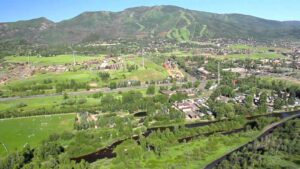
Geothermal and Thermal Energy Networks for Mountain Towns
Project Overview Heating and cooling buildings is one of the hardest parts of community decarbonization, especially in cold mountain climates and in states where local governments have limited control over energy codes or gas hookups. The panel’s core message was that geothermal is a key tool for community decarbonization, and that the most practical form […]