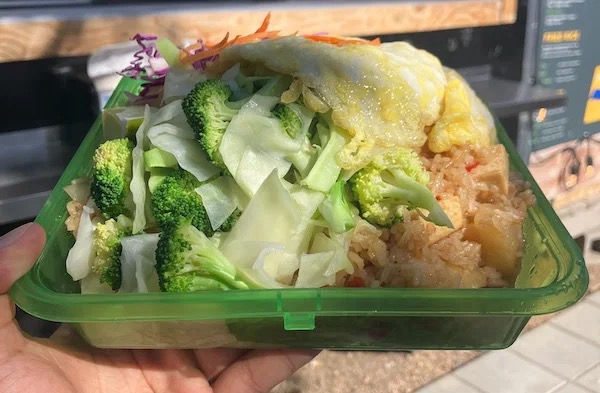
Dish: Reusable Foodware in Deschutes County, Oregon
Project Overview
The Dish program (previously Reuse Deschutes) aims to transition Central Oregon’s food service industry from single-use foodware to washable, reusable plates, bowls, boats, trays, cups, and silverware. The program was initiated by Kavi Chokshi, the Rethink Waste Innovation Manager at The Environmental Center, through which Dish will be launched. The Environmental Center is a nonprofit organization in Bend, Oregon that integrates sustainability into life and policy across Central Oregon.
Inspired by Deschutes County’s 31 food cart lots (with 13 to 20 located in Bend alone), the Dish program targets these high-density dining hubs, where average clusters of 6 carts generate significant localized single-use packaging waste. Food trucks are often unable to accommodate reusable foodware, as they do not have enough space for an industrial dishwasher.
The Dish program is built to address two components of the single-use foodware issue through Dish for Here and Dish to Go. Neither component has fully launched yet; both are in the development and onboarding phase.
Dish for Here: On-Site Dining at Food Truck Lots and Events
This component of the program will allow consumers and businesses to use standardized reusable containers that are returned to the business after use at the event location. It is designed for the needs of food truck lots, where customers purchase and eat food in the same location. Dish for Here is partnering with Bold Reuse to launch a Central Oregon Wash Hub and Reuse System, which will operate as a closed-loop sanitation and logistics system that enables high-volume, outdoor, and mobile food vendors to eliminate disposable packaging. Bold Reuse is a full-service reusable packaging platform that provides infrastructure for durable foodware, collection bins, delivery logistics, and commercial washing centers.
Dish to Go: Takeout Containers with a Network of Drop-Off Points
This component of the program will allow customers to rent, purchase, or borrow reusable containers at participating vendor locations and return them at a network of convenient drop-off stations throughout the area.
The goal of the program as a whole is to enable businesses with limited dishwashing capacity to offer reusable takeout containers that customers can use and return.
Program Design, Funding, and Impact
While designing the program, The Environmental Center is focusing on accessibility, business viability, and local infrastructure. Program design has been guided by DISH (Diverse Input on Sustainable Hospitality), a 27-member stakeholder advisory group made up of food cart operators, restaurant managers, residents, Deschutes County Environmental Health staff, City personnel, and sustainability advocates. Meeting regularly to shape the initiative, DISH selected the overarching name Dish, featuring the two project components, Dish to Go and Dish for Here. To ensure inclusive participation, advisory members received a stipend of $40 to $120 per meeting. The initial rollout of Dish to Go will launch across 7 major food cart lots and 4 local event organizers.
The Dish program is supported by a combination of private and public partners, including grants from the Oregon Department of Environmental Quality, the City of Bend Climate Action Partner Grant, the Visit Bend Sustainability Fund, Deschutes County Solid Waste, and regional commercial wash partners like Bold Reuse. Launching a hub at this scale requires $100,000 to $300,000 in seed grant funding to cover initial equipment, sanitation infrastructure, collection bins, and launch logistics.
The two components of the program are estimated to save over 250,000 single-use items a year, adding up to millions of items diverted in subsequent years. Reusable items also reduce PFAS and other contaminants in food while cutting litter and microplastics in the local environment. Direct savings for local businesses on container purchases will vary by vendor and are not guaranteed, but participating businesses are expected to cut trash disposal costs while significantly reducing the labor and hassle of managing waste. While the Dish program has not hired staff for the onboarding phase, it is expected to generate local sustainability jobs once operational, depending on dishwashing volume. Finally, the high visibility of the initiative will help shift the local culture and lead to further sustainable behaviors.
The initial rollout launches in November 2026, with preliminary impact metrics expected by April 2027.
Lessons Learned
Reduce the Burden on Businesses
Food truck vendors and other off-site food service owners usually lack the space or available labor to wash dishes on-site. Providing an off-site collection and wash system, like the drop-off locations and wash hub, is necessary to secure business buy-in. Using grants to keep the program cost-competitive with single-use containers is also important, especially in the food service industry, where margins are already tight.
By standardizing the type of containers used and expected by customers across establishments, Dish will reduce customer confusion about how to use and return the items.
Funding Across Sectors
The Dish program secured funding across different organizations and sectors, from tourism to state agencies. This has created a multi-year financial safety net that is necessary to build the lasting infrastructure a program of this scope requires.