Discover Vail: Walk, Bike or Ride
The Town of Vail embraces green transportation with all its challenges, knowing it is cultivating and sharing a path toward a better future for its citizens, visitors, and the world.
Project Overview
The Town of Vail is proving that navigating a mountain town doesn’t have to mean getting behind the wheel or breathing polluted air. Its sustainable transportation and supply chain programs include an e-courier program, low-cost transit options for workers such as a free bus system, free e-bikes, car sharing, green commuting incentives, and an electric vehicle readiness program. By promoting and funding these solutions, Vail is building a connected mobility system that makes low-carbon transportation choices easy for everyone.
Supply Chain: The E-Vail Courier Program
The E-Vail Courier Program is a last-mile delivery system that routes delivery and purveyor trucks to a central dock where they can unload. Shipments are then distributed to local businesses using small electric carts. The Town of Vail partnered with 106 West Logistics to develop and operate the program, which was adopted to increase pedestrian safety, improve the guest experience, and reduce environmental impacts, including noise, air pollution, and greenhouse gas emissions caused by vehicle traffic in pedestrian mall areas. Keeping delivery trucks from driving into and idling in the main pedestrian villages reduces at least 150 metric tons of greenhouse gas emissions each year. The Town of Vail has codified rules for when and where delivery vehicles can operate in Vail Village and Lionshead to keep pedestrian areas safe, accessible, and enjoyable.
Buses
The Town of Vail has one of the largest free bus systems in North America. Twelve of its 33 buses are fully electric, and Vail plans to have an all-electric fleet by 2032. The bus system is free to ride and averages 2.8 million riders per year.
Bikes: Shift Bike
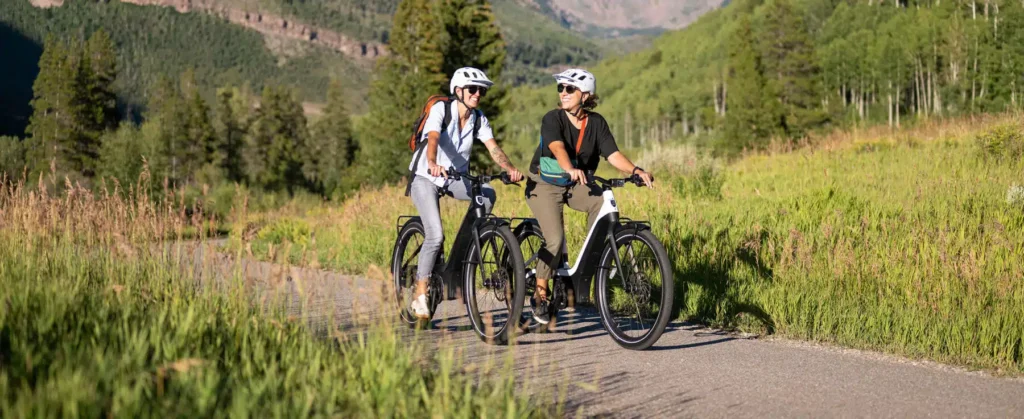
The Town of Vail collaborated with regional partners, including the Town of Avon, Eagle-Vail Metro District, Edwards Metro District, and Eagle County, to launch the Shift Bike regional electric bike share program in 2022. The program is operated by Drop Mobility and has grown to include 165 e-bikes, 2 e-cargo bikes, and 36 hub stations from East Vail to West Edwards. Pricing options include Pay as You Go, locals-only monthly and seasonal memberships, and equity pricing. Each participating municipality pays a share of the annual contract proportionate to the number of e-bikes and stations in its community. Shift Bike received $50,000 in grant funding for expansion in 2023 from the Colorado Department of Transportation’s Innovative Mobility grant program. It operates from May through October each year, with goals to offer first- and last-mile solutions, reduce single-occupancy vehicle trips, increase access to e-bikes, reduce air pollution and greenhouse gas emissions, and promote healthy, active transportation. Since the program launched, riders have logged 201,000 miles over 60,000 e-bike trips, avoiding 73 metric tons of greenhouse gas emissions from vehicle trips.
Bikes: E-Bikes for Essentials
The Town of Vail offers E-Bikes for Essentials, an e-bike initiative paid for through local tax revenues. The program provides income-qualified residents with free e-bikes and all related safety and commuting gear if they commit to using the e-bikes as their primary commuting mode during non-snow months. Since launching in 2021, the program has provided e-bikes to 30 Vail residents, who have logged over 50,000 e-bike miles, avoiding roughly 18 metric tons of CO2e by biking instead of driving. Vail partners with the National Lab of the Rockies (formerly NREL), using its Open Path app to track e-bike trips. The program was recently cut due to budget constraints after poor snow conditions in 2026 caused Vail’s sales tax revenues to drop, and it is proposed to return in the 2027 budget.
Car Sharing: Zipcar
The Town of Vail is pairing a car share program with Zipcar and new workforce housing developments. The two developments, Timber Ridge and Middle Creek Village, have limited parking. Car sharing gives residents access to a car even if they don’t own one, making it possible to live “car light” or even car-free, while also using the free transit system or e-bikes to commute. The Vail Zipcar program has four hybrid vehicles outfitted with bike and ski racks: two at Middle Creek Village and two at the Vail Village Parking Structure. Residents and guests can rent a vehicle for $9.50 per hour or $66.50 per day. The town intends to grow the program and add fully electric vehicles in the future.
Ride: Sole Power Plus Green Commuting Challenge
The Sole Power Plus Green Commuting Challenge is an incentive program that encourages participants to commute with carbon-neutral methods rather than driving. Funded by the Town of Vail and its local partners for the last 16 years and offered throughout Eagle County, the program encourages human-powered commuting and in 2026 expanded to include “plus powered” options: bus ridership and carpooling. The challenge historically ran from Memorial Day to Indigenous Peoples’ Day and became a year-round program in 2026 with the addition of the plus-powered options. Participants use the Sole Power Plus trip logging app, which offers weekly prizes and monthly sponsored happy hours for commuters who log green trips. Participants can join a team or take part individually, with leaderboards for both to encourage friendly competition. The original goal of logging 60,000 green commuting miles per year was far surpassed after transit and carpooling were added. Since the program began in 2011, over 3,200 participants have logged 725,000 miles, representing nearly 300 metric tons of avoided greenhouse gas emissions, though some of this may be double-counted with reductions from Vail’s other programs.
EV Readiness
Vail’s 2021 GoEV Resolution No. 48 set a goal for 30% of locally registered vehicles to be electric or zero-emission by 2030, and 100% by 2050. The path to get there is outlined in the Town of Vail’s 2023 Electric Vehicle Readiness Plan. The town offers multiple rebates for EVs and charging infrastructure in partnership with Walking Mountains Science Center and Energy Smart Colorado, including a $1,000 rebate on EV and hybrid vehicle purchases for residents, as well as rebates for e-bike ownership.
The Town of Vail has 30 public EV charging ports: 26 Level 2 ports and 4 DC fast charging ports. The town also has four Level 2 ports at the municipal offices for employees and people conducting town business, and another four Level 2 ports at Public Works for employees, who receive free EV charging as a benefit and incentive. The town also maintains an extensive charging network for its electric buses.
Lessons Learned
Public E-Bike Share Can Complement Local Bike Shop Rentals Without Competing
With a public e-bike program, it’s important to respect bike rental businesses that may already serve visitors who want to ride e-bikes. The Town of Vail communicated with bike rental businesses while creating the program, which helped avoid conflict. Shift Bike is promoted for short trips from point A to point B, and guests are encouraged to visit local bike shops for longer excursions or multi-day rentals. The locals-only memberships and Pay as You Go pricing also support primary use by locals and shorter use by guests.
Low-Snow Seasons Can Strain Municipal Budgets, Including Sustainability Programs
Low snowpack led to reduced visitation and sales tax revenues, requiring Vail to make budget reductions across the board. One program cut was E-Bikes for Essentials, which provided free e-bikes to income-qualified residents who committed to using them as their primary commuting mode. In low-snow years, the economic impacts of reduced tourism can extend to sustainability programs. Finding additional funding sources and diversifying income streams can make these programs more resilient.
Transportation Programs Are Replicable
Many of these transportation programs are easy to replicate and have already been implemented in multiple communities. For example, both Teton Village and Breckenridge were influenced by Vail’s e-delivery courier program and have implemented similar programs. However, local differences in resources or layout can lead to different implementation approaches and unique challenges or opportunities. Breckenridge had an additional hurdle because there was no existing loading dock, so it had to build one from scratch. When replicating a program, it’s important to understand how local factors may require different strategies than the original model.
Funding Pathways
Colorado Department of Transportation grants that can support similar programs:
- MMOF (Multimodal Transportation & Mitigation Options Fund): probably the best overall fit. It explicitly supports multimodal transportation, bicycle and pedestrian projects, transportation demand management, mobility technology, and projects that reduce vehicle miles traveled and greenhouse gases.
- Transportation Alternatives Program (TAP): best for bike and pedestrian infrastructure, trails, and active transportation.
- Safe Routes Activating Communities: especially promising for small mountain towns because CDOT specifically prioritizes rural and small communities.
- Clean Transit Enterprise: a strong opportunity for communities working on electric buses, shuttles, charging infrastructure, and transit facility upgrades.
- Carbon Reduction Program: federal funding for Colorado transportation projects that reduce greenhouse gas emissions, including transit, bicycle and pedestrian infrastructure, and multimodal transportation.